
Pressing plants can be as simple as putting a plant inside of a book and closing the pages. You don’t need much. The following are some of the supplies that I used in a recent workshop for the Wild Wonder Foundation. These are amazon affiliate links so I get a small percentage if you buy using these links. You can also just use this list as a reference and buy from a local retailer.
Here is the microwave flower press that I have heard good things about called microfleur. I have not tried it yet and am currently using a homemade Frankenstein flower press.
Hake brushes for spreading modge podge. More expensive than the chip brushes but much better quality.
Chip brushes also an option for spreading glue:
Modge podge is a glue and works to seal the flowers
pva glue is another adhesive option especially if you are worried about archival.
Packing tape! Some people just cover leaves with this. Perhaps, the quickest and dirtiest way to press plants onto your page. Almost like a lamination.
Tombow mono multi, this is the glue stick in my field kit, I really like it.
Handbook journal co pocket panorama, this is a really nice sketchbook, can work as a mini press
Stillman and Birn nova series trio has a mix of toned paper to use as backing paper:
Tracing paper is helpful for sticky plants:
These are really cool clamps I used for my press in the past
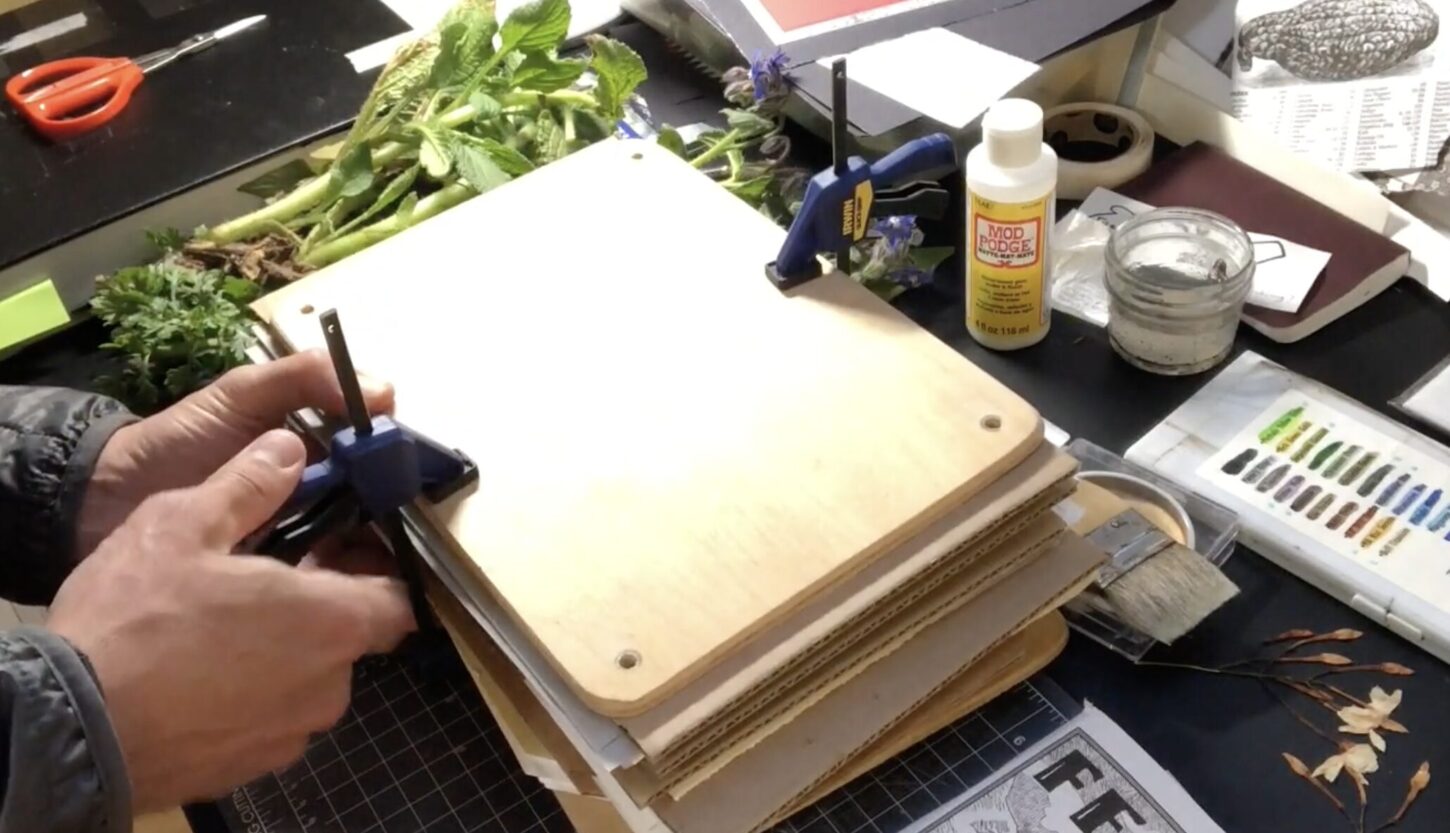
NRS straps these are the straps I use now, they are more functional than the clamps and take up less space.
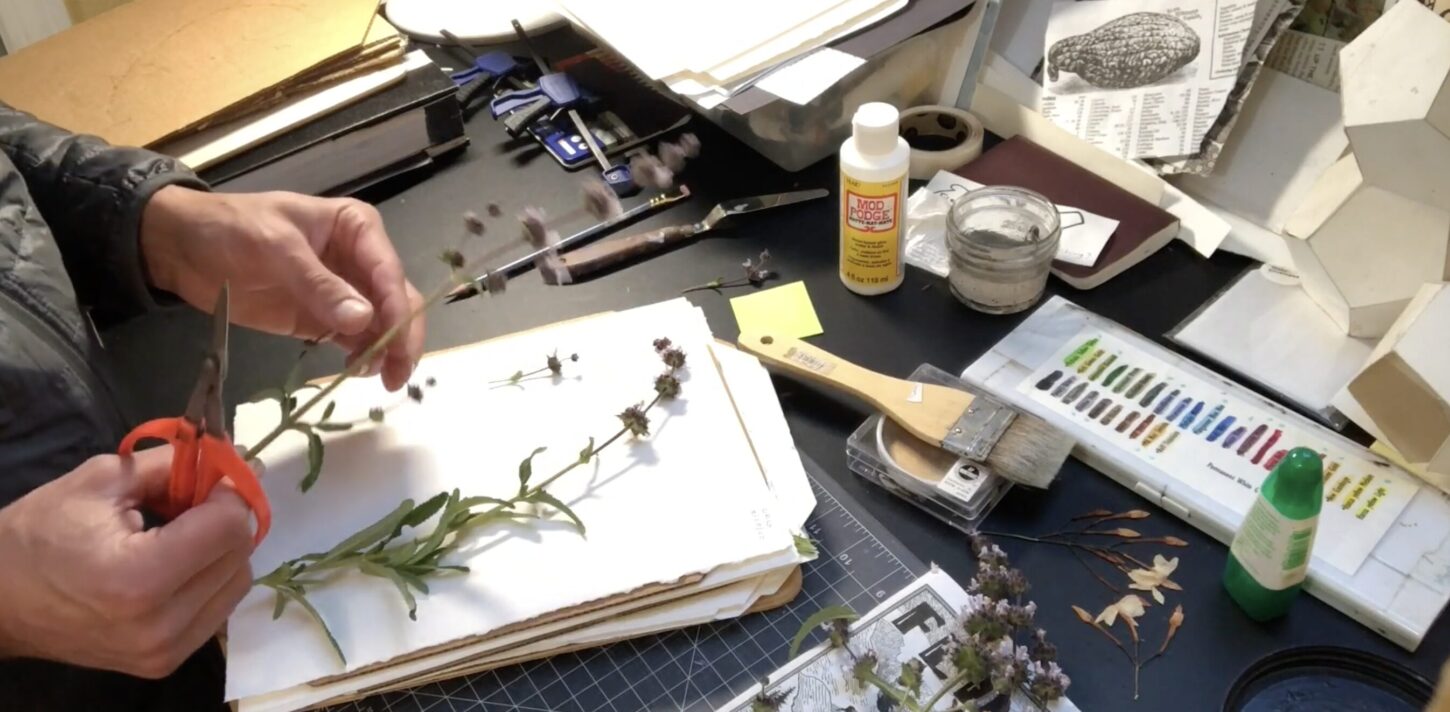
I also like to have some japanese pruning scissors like these and tweezers.
The recording for the plant pressing class will be available in October but the following videos from my Youtube Channel also talk about pressing plants and how to combine pressed flowers into your nature journaling practice.
Here is an Outline from the Pressed Plants in Your Nature Journal Class
- Why press plants?
- speed
- accuracy
- addiction (it’s fun to collect things!)
- voucher concept
- composition
- learning tool
- botany
- gardening
- rewilding
- aesthetic
- spread disease (just kidding but be aware)
- loosen up
How to press plants and flowers
-
- Easier than drawing in your nature journal
- Find the right plants
- not too woody or 3D
- not too wet
- if they are plants that are hard to draw even better
- Choose the size you want (I make it so everything will fit in my journal pages.
- harvest material
- ethics/safety
- Respect nature
- Learn what your specific place needs
- Ask experts or the plants
- Practice making your own ethical decisions instead of blindly following what someone else tells you or a government tells you
- Are there instances where NOT picking a flower is a crime? (Marley believes yes)
- ethics/safety
- prepare plant materials (lots of space)
- You need space for spreading things out, maybe cleaning, maybe remove bugs and extra leaves, maybe cutting some things
- prepare press
- pressing paper
- cardboard
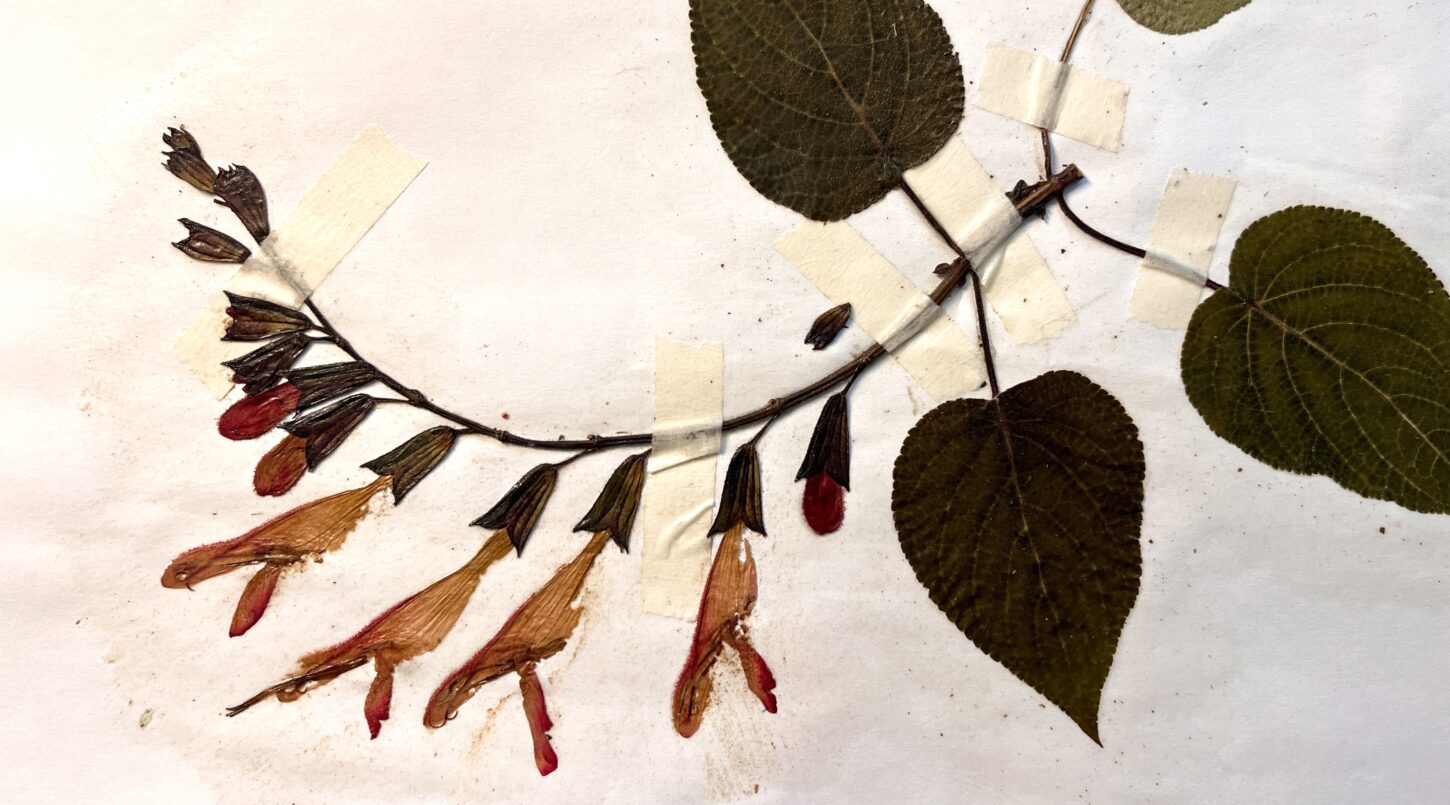
- tape
- Sometimes, I use artist’s tape to position things. and leave the tape in the final presentation.
After Your Plants are Pressed
- Once again you need lots of table space, for glue to dry, for you to spread things out, and to wrangle the pages and cardboard and specimens once you open your press.
- backing paper (get creative with the paper that you mount the final pressed plant or flower to. It doesn’t have to be the same paper as the pressing paper. I like using black paper, other colors of toned paper, and also weird stuff like isometric graph paper)
- cutouts (very fun to do with small pressed flowers or full plants that have a fun silhouette, works well with contrasting colors of backing paper.)
- modge podge over (as a sealant)
- small flowers
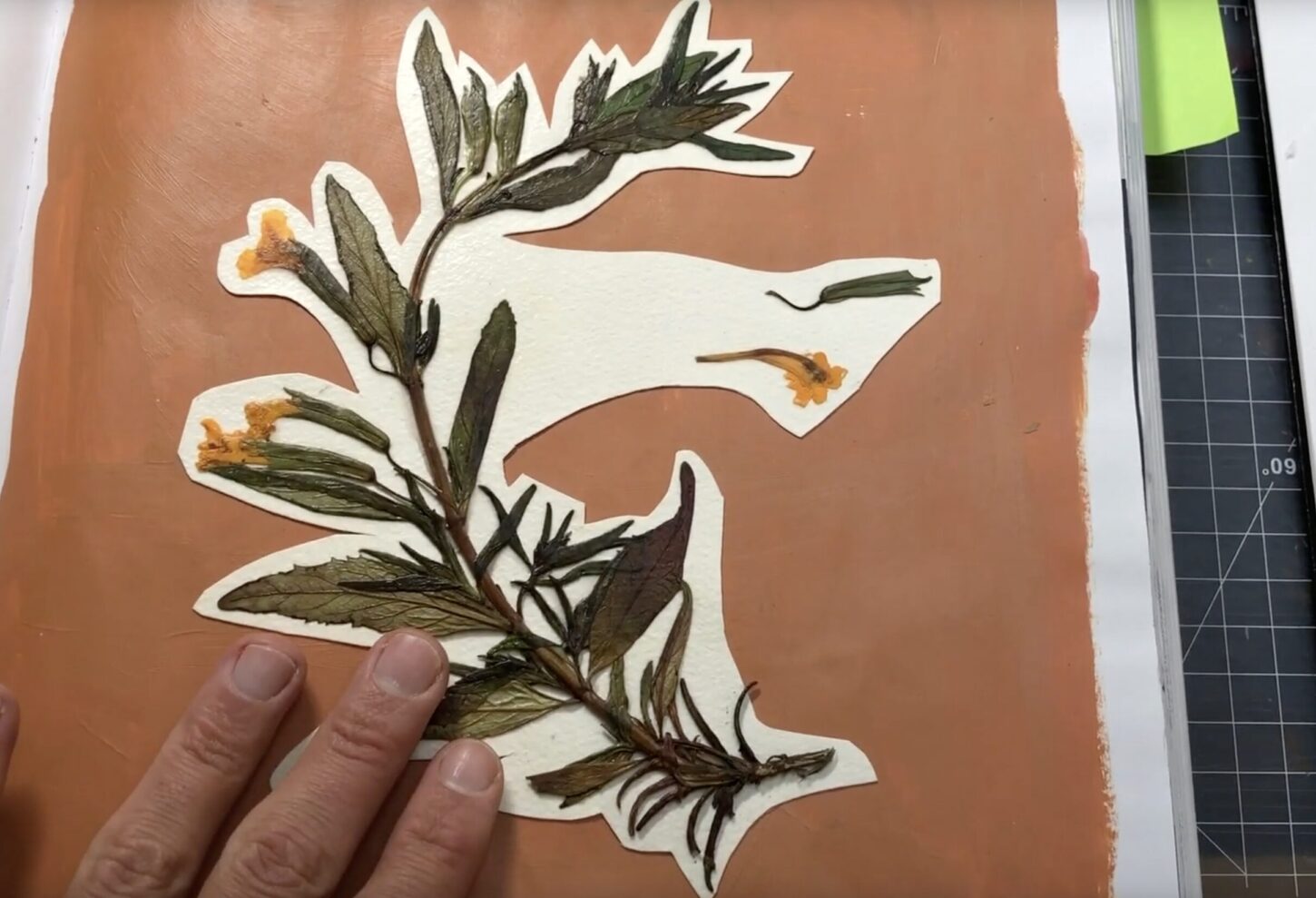
- I didn’t talk much about the scientific side of pressing plants. If you want it to be data you need information about collection, where? When? the context. One challenge about pressed plants is they might not be ready to insert into your nature journal while you are in that place so might require some chronology work-arounds in your journal.
- Here is a very simple explanation on the steps for recording data with your specimen in an article from the American Museum of Natural History.
Pro Tip for pressing plants and making your life easier…
- Keep one press for storage and one for collecting
- You don’t want delicate finished flowers falling out while you are trying to press plants in the field somewhere with high winds and a river nearby.
Can I still Press Plants if I don’t have that stuff?
- You don’t need access to wilderness areas or own a botanical garden to press plants
- weeds
- houseplants
- salad mix
- You don’t need a million supplies to press plants
- dictionary
- packing tape
- envelopes
