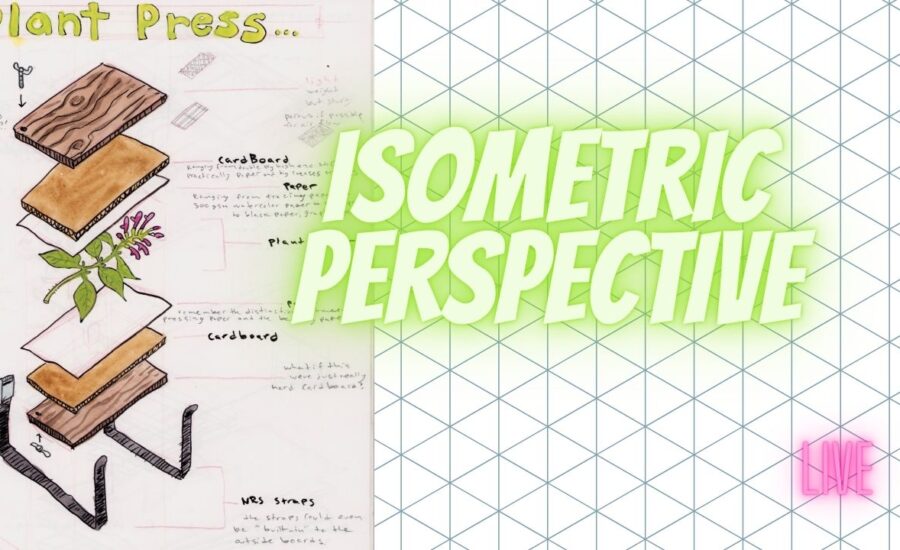
What is isometric perspective and how can it be a fun and useful tool for doodling, lettering, diagrams, nature journaling, character design, and maps? Here is some history and some explanation, scroll to the bottom to see my recent video about this.
This post is an example of a rabbit hole:
I’m on the trail of an interesting scent, there could be something valuable down here, it could connect to an unexpected but useful backdoor entrance, it could teach us something interesting or it could be a dead end. Leonardo DaVinci went down intellectual rabbit holes and so will we. Stay tuned for more.
Isometric Diagrams
Recently, I was trying to come up with a better design for a plant press. Even though I did not have my isometric graph paper on hand it still made sense to use a freehand isometric view to brainstorm plant press ideas.

Isometric Perspective for Telling a Story
There is a great history of isometric perspective in the Ottoman Empire and Mughal Empires. In this tradition small paintings were made with lots of detail often telling a story. Because they were small they are known as Ottoman miniatures or Mughal Miniatures.
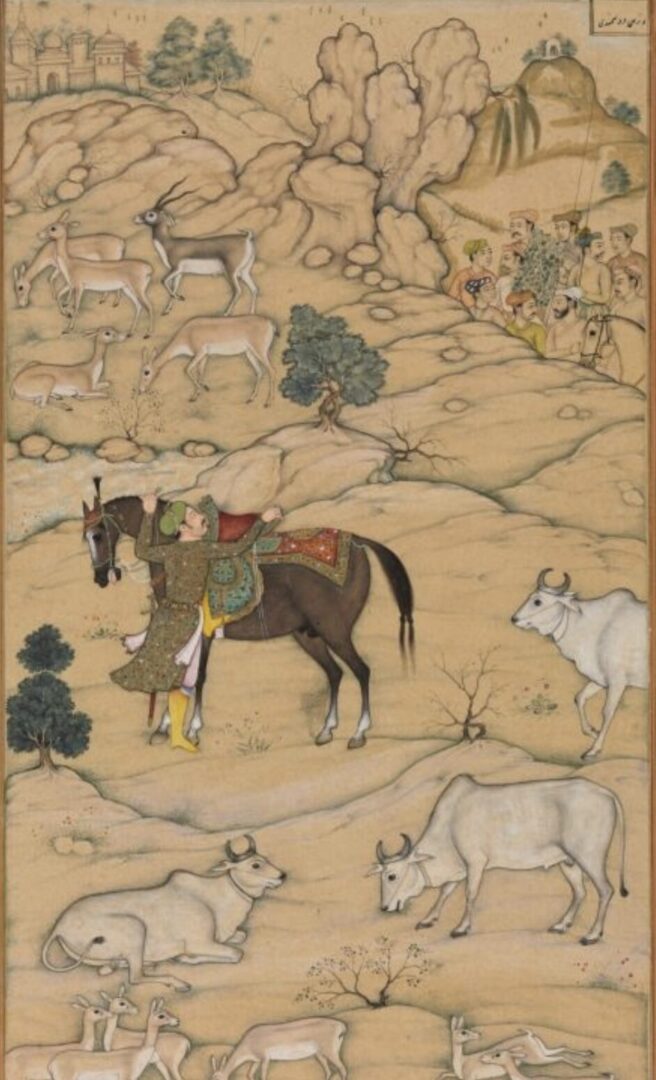
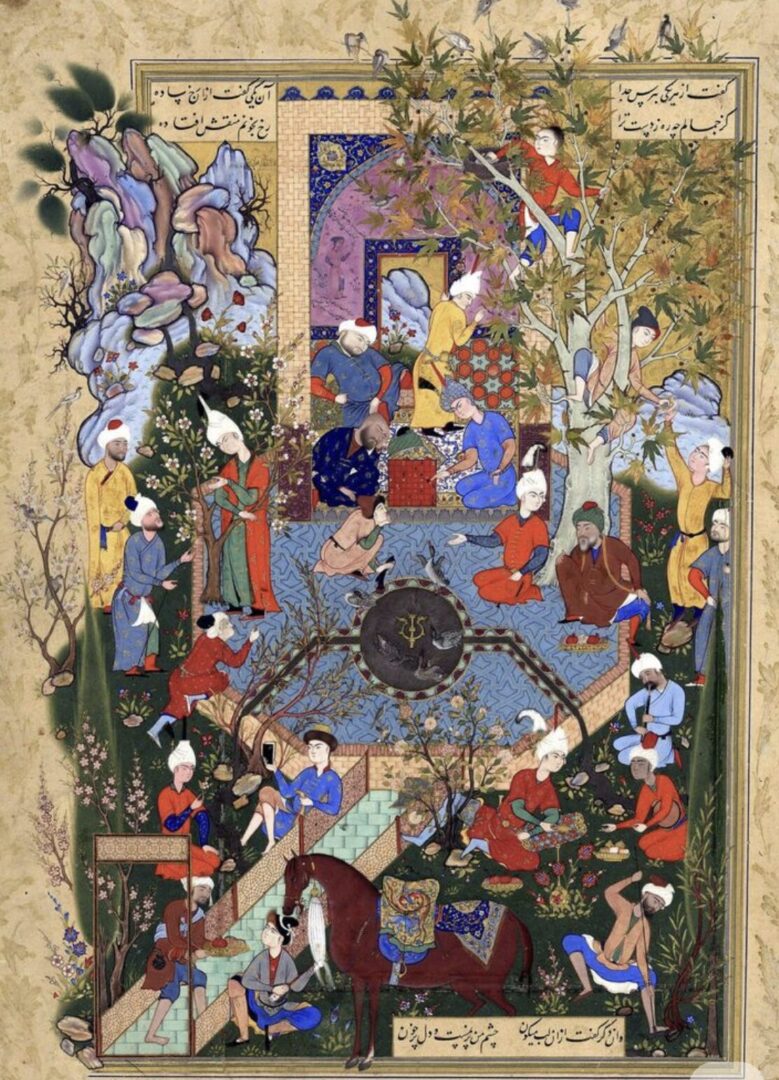
With Isometric Perspective you can show an equal level of detail in all areas while still maintaining a sensation of spatial distance. Therefore, you can have someone in the foreground and people far away spying on him. The unique perspective allows you to show facial expressions on all of them. This also works well for a field with many animals. Above you can see both of those benefits used in one painting.
Isometric Perspective for Lettering
I like bubble letters and use them a lot in my sketchbooks, nature journals, and sketchnotes. Usually, I just use two dimensional looking bubble letters. However, it is possible to make bubble letters that look like 3D boxes. Isometric graph paper is the best way to practice this.

Maps
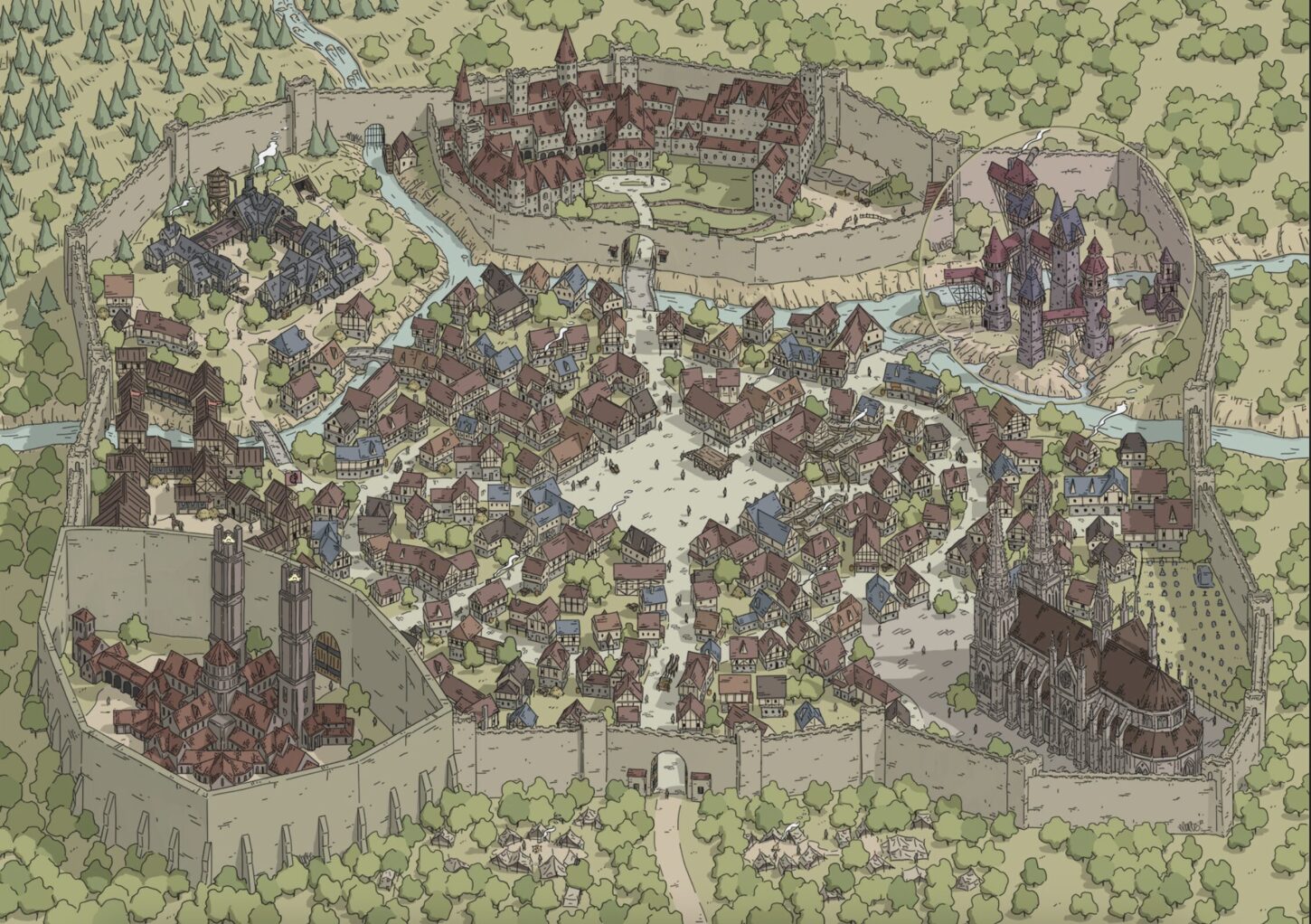
Another great use for isometric perspective is for maps. The Ottomans did this and it has been adopted for maps in fantasy novels and many role playing games, tabletop games, and video games.
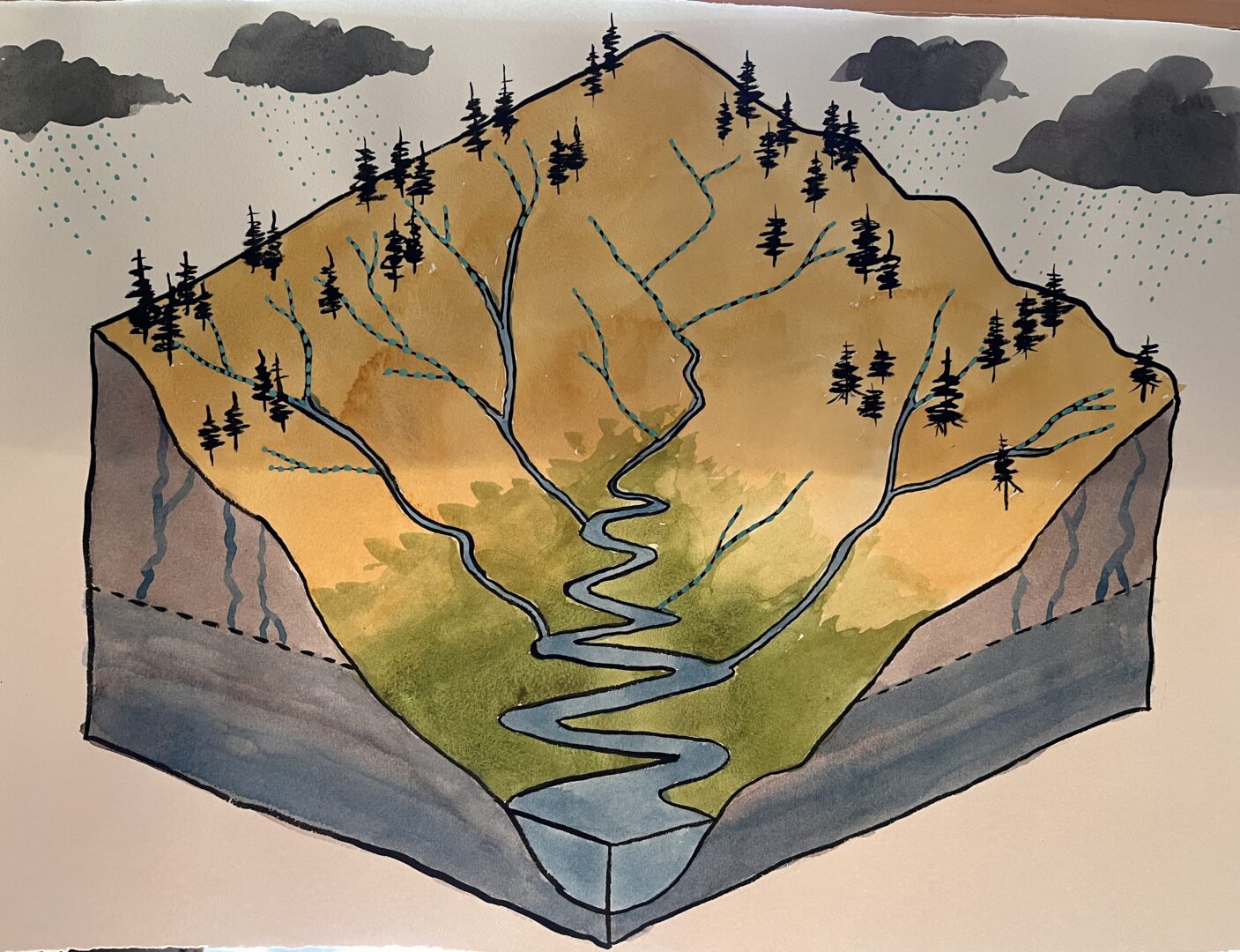
In the nature journaling community, John Muir Laws has popularized the use of block diagrams to show landscape features. It creates the illusion of 3D of the terrain and can be a way to show underground elements. Above, you can see an illustration I made showing the water cycle, including below ground elements. Many people struggle to draw these. My recommendation is to use isometric graph paper like this one.